



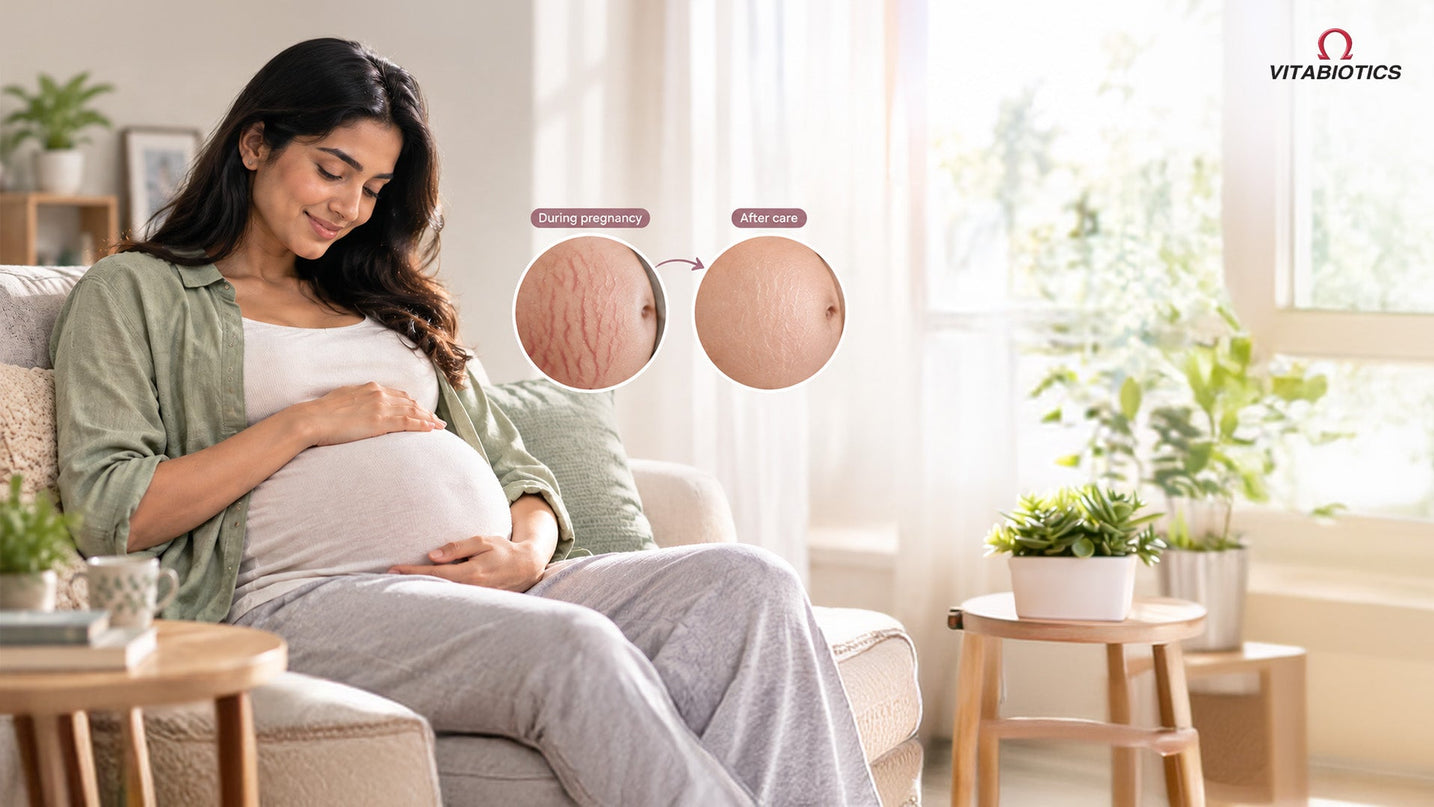
As the baby bump grows, the skin stretches to make room. This can lead to pink, red, purple or brown lines on the belly, breasts or thighs. These pregnancy skin changes, commonly known as stretch marks, are a common part of pregnancy.
Although stretch marks cannot always be prevented, caring for skin during pregnancy can help manage dryness and tightness. Understanding why they appear can also help women make informed choices about pregnancy skincare as their bodies change.
What Are Pregnancy Stretch Marks
Pregnancy stretch marks, medically known as striae gravidarum, develop when the skin stretches and the tissue beneath it changes. They often appear on the abdomen as the bump grows, but can also develop on the breasts, hips, thighs and buttocks.
The dermis, the middle layer of the skin, contains collagen and elastin fibres that help provide structure and flexibility. During pregnancy, hormonal changes and increasing skin tension can affect these fibres, contributing to stretch marks. Genetics also plays a role in how likely they are to develop.
Stretch marks often become lighter after childbirth, although they may not disappear completely.
When and Where Do Stretch Marks Appear
Stretch marks often become noticeable during the second half of pregnancy, particularly in the third trimester. However, they can appear earlier, and some women may not develop them at all.
Common areas include:
- Belly: As the abdomen expands.
- Breasts: As they change in size.
- Hips and thighs: As the body changes shape.
- Buttocks and lower back: Where the skin may stretch.
After childbirth, stretch marks often fade gradually. They may remain visible, and that is common. Their appearance is not a reflection of how well the skin has been cared for.
How to Care for Skin During Pregnancy
A gentle skincare routine can help manage dryness, tightness and irritation. While no cream can guarantee stretch-mark prevention, a few everyday habits can help keep the skin comfortable.
1. Moisturise Regularly
As the skin stretches, it may feel dry or tight. Applying a gentle moisturiser can help ease dryness and improve comfort. A pregnancy skincare product, such as Pregnacream, may be considered after checking its ingredients and directions for use. However, evidence that creams prevent stretch marks is limited.
2. Stay Hydrated
Drinking enough water supports overall wellbeing during pregnancy. If your skin feels dry or tight, applying a moisturiser can help improve comfort.
3. Eat a Balanced Diet
A varied diet containing fruits, vegetables, whole grains, protein sources and healthy fats helps meet nutritional needs during pregnancy. Vitamin C contributes to normal collagen formation for the normal function of skin.
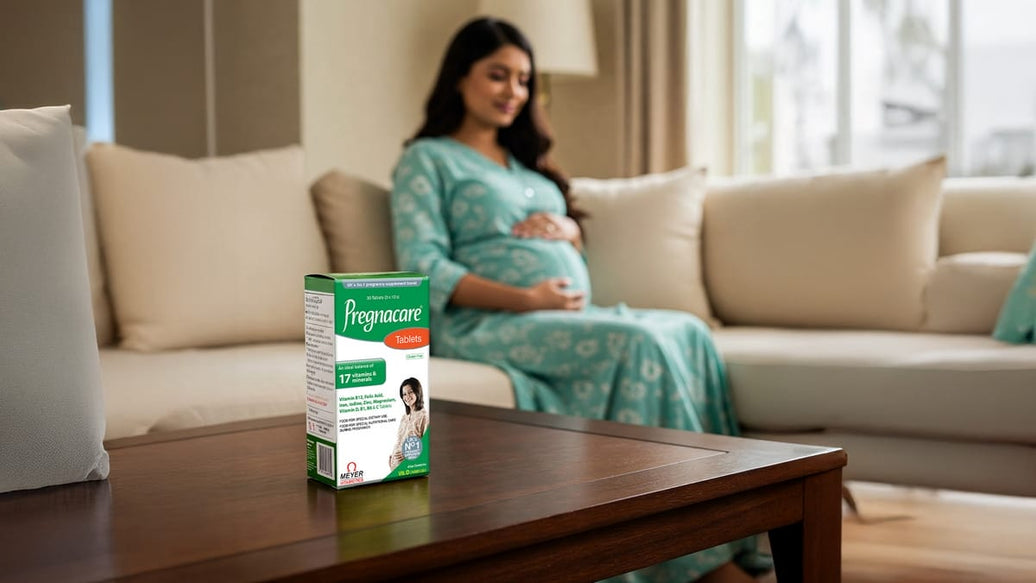
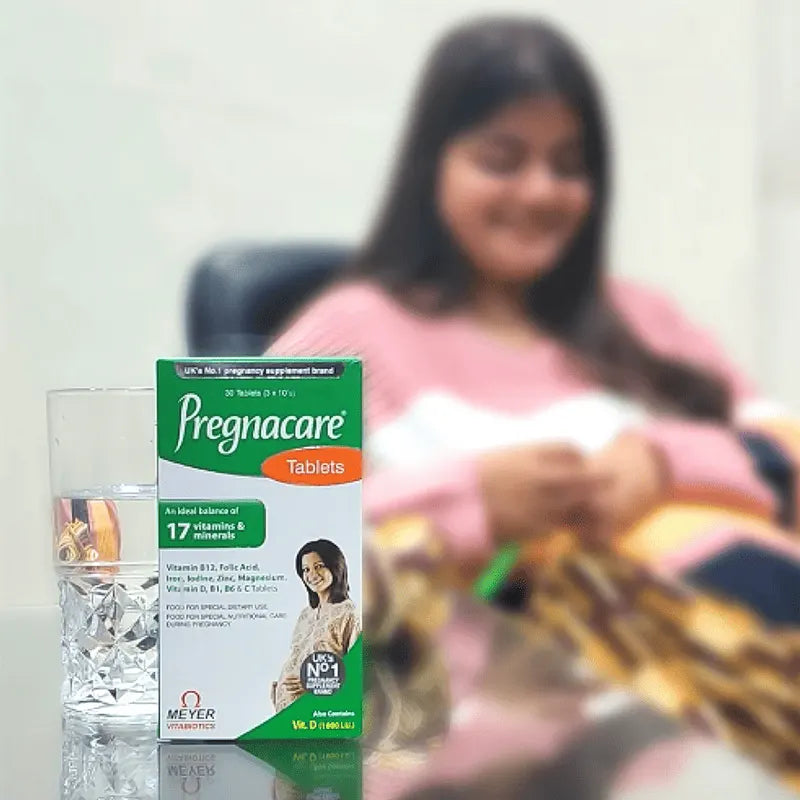
Pregnancy supplements such as Pregnacare may help supplement nutritional intake when used as directed. A doctor or midwife can advise on individual nutritional needs and suitable supplements.
4. Choose Gentle Skincare Products
Pregnancy can make skin feel more sensitive. Choose mild cleansers and gentle moisturisers, and avoid products that cause irritation. Retinoids are generally not recommended during pregnancy, so check product labels and consult a healthcare professional before using unfamiliar treatments.
5. Do Not Ignore Persistent Itching
Some itching can occur as the skin stretches. However, severe or persistent itching, particularly on the palms or soles or when it gets worse at night, needs prompt assessment by a maternity care professional. It can sometimes signal a pregnancy-related condition.
Caring for Your Skin Through Pregnancy
Stretch marks are a common part of pregnancy and can be influenced by hormonal changes, genetics and skin stretching. While they may fade over time, they do not always disappear completely.
A gentle skincare routine and a balanced diet can help support skin comfort and nutritional needs during pregnancy. The aim is to care for your skin as your body changes, rather than expect to prevent every stretch mark.
FAQs:
Can Stretch Marks Be Prevented During Pregnancy?
There is no proven way to prevent all stretch marks. Genetics, hormonal changes and skin stretching influence their development. Moisturisers can help relieve dryness, but evidence that they prevent stretch marks is limited.
Do Pregnancy Stretch Marks Go Away After Birth?
Stretch marks usually become lighter over time, but they may not disappear completely. Their appearance can continue to change in the months after childbirth.
Are Stretch Mark Creams Safe During Pregnancy?
Choose a stretch mark cream intended for use during pregnancy and check its ingredients before applying it. Pregnacream may be considered as part of a pregnancy skincare routine; follow the product directions for use. Retinoids are generally not recommended during pregnancy. If you are unsure about any ingredient, consult a doctor or midwife.